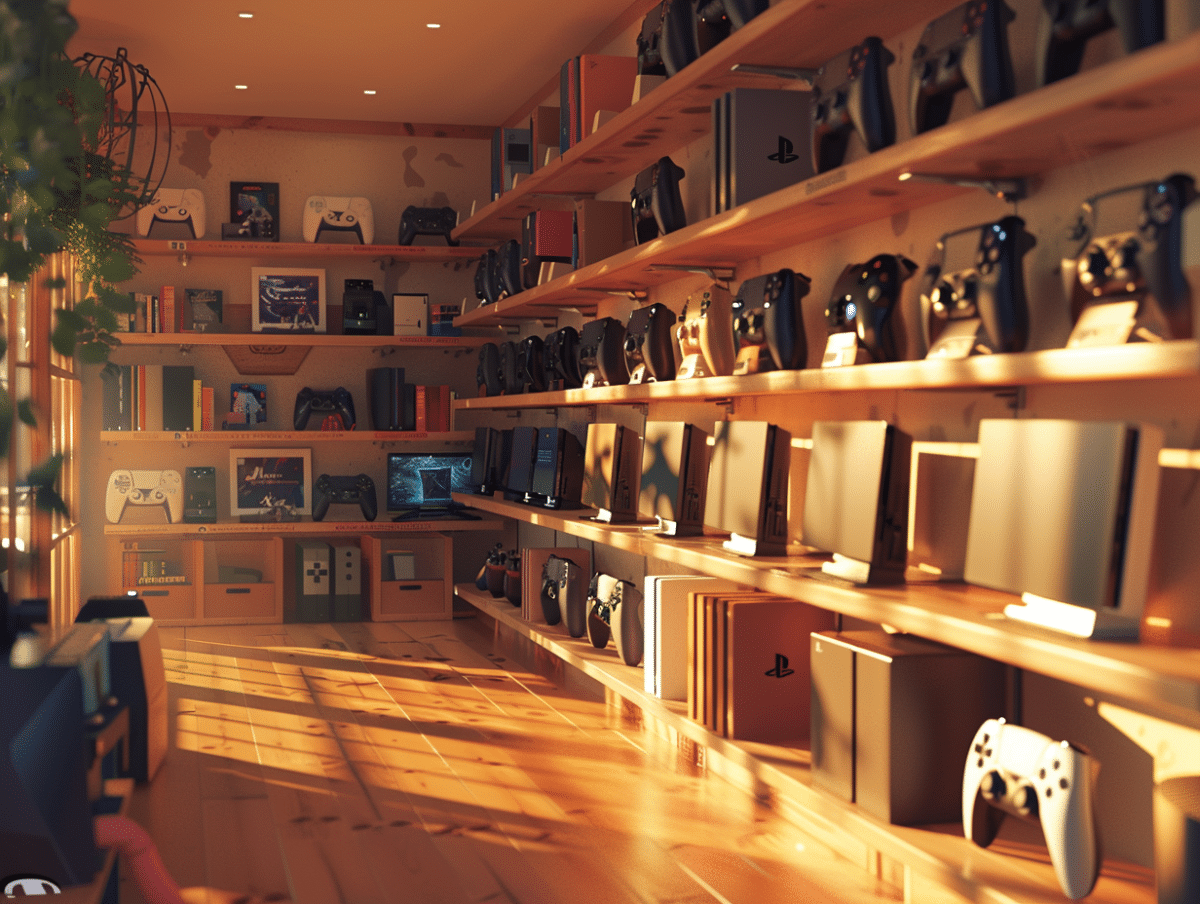
Backward compatibility in PlayStation consoles sparks passionate discussions within the gaming community. While video game enthusiasts express a keen interest in the possibility of playing their favorite titles on the latest systems, Sony has taken a variable approach across generations. The company’s decisions regarding the support of games from older consoles on current platforms have often influenced the user experience and purchasing trends, highlighting the importance of this feature for customer loyalty and the preservation of gaming heritage.
Backward Compatibility on PlayStation: Stakes and Expectations of Players
Backward compatibility of PlayStation consoles serves as a vector of attachment for players seeking to extend the experience of their games acquired on previous generations. Sony, aware of these expectations, has filed a backward compatibility patent, raising hopes of seeing titles from older PlayStations make their way to cutting-edge technologies. This anticipation crystallizes around the possibility of playing PS3 games on PS5, a feature that, if realized, would be a strong argument for the new PlayStation Next Gen Console against its competitors.
At the heart of concerns, Sony’s new generation of consoles is expected to be backward compatible with PlayStation 4 games, a promise that eases some of the community’s worries. However, the demand for extended backward compatibility, including PlayStation 1, PlayStation 2, and PlayStation 3 games, remains strong. This continuity in the gaming experience is essential for many users; it embodies not only a respect for gaming heritage but also a response to a logic of sustainable consumption.
In light of these challenges, Sony finds itself at a crossroads. The patent filing suggests a favorable orientation towards backward compatibility, but the technical and economic implementation remains subject to the specifics of the PlayStation Next Gen Console. The announced technical features, such as the integration of an AMD eight-core SoC and a 7 nm Zen 2 architecture, along with ray tracing capabilities and the use of SSD for reduced loading times, indicate increased possibilities for integrating games from previous generations. The portability of older titles in a radically different hardware and software environment poses a significant challenge that Sony will have to meet to satisfy the high expectations of its clientele.

Impact of Backward Compatibility on the Video Game Industry and Sony’s Decisions
Backward compatibility transcends mere functionality and establishes itself as a structuring trend within the video game industry. By allowing access to games from previous generations, Sony not only satisfies a growing demand; the company also shapes a business strategy that values its heritage and increases the longevity of titles acquired by players.
From Sony’s decisions emanates a vision of a console that honors the past while embracing the future. The PlayStation Next Gen Console, praised for its AMD eight-core SoC and 7 nm Zen 2 architecture, promises unprecedented performance and 8K graphics. The company, under the leadership of architect Mark Cerny, has revealed a machine that is not only backward compatible but also designed to innovate and redefine the standards of the gaming experience.
This technological advancement is realized in the replacement of hard drives with SSDs, as well as in the adoption of ray tracing, thus elevating visual fidelity to a higher level. Consider these design choices as direct responses to the demands of players and the imperatives of a competitive market. By investing in these technologies, Sony positions itself not only as a guardian of its historical catalog but also as a pioneer, ready to set new standards for the years to come.