
Career guidance is based on three pillars: self-knowledge, knowledge of professions, and understanding the training pathways that lead to them. Establishing these foundations allows for transforming a choice perceived as definitive into a progressive approach, adjustable at each stage of schooling.
Observation internships from 9th grade: a changing guidance calendar
Starting from the 2026 school year, observation internships in companies are mandatory from 9th grade in all academies. This measure brings forward by one year the first structured contact with the world of work.
The goal is concrete: to allow a student to confront an idea of a profession with their daily reality even before making post-9th grade orientation wishes. An internship in a mechanical workshop or an architecture firm does not always confirm a vocation, but it often eliminates false representations.
To prepare for these immersions, regional platforms list the training programs, professions, and possible internship locations. Nadoz groups, for example, the job sheets and accessible courses in Brittany, with filters by sector and diploma level.
Families of professions in vocational pathways: understanding the orientation mechanism
The vocational pathway after 9th grade is no longer just about choosing a specific vocational baccalaureate from 10th grade. The system of families of professions groups several specialties under a common core in 10th grade. Specialization occurs in 11th grade.
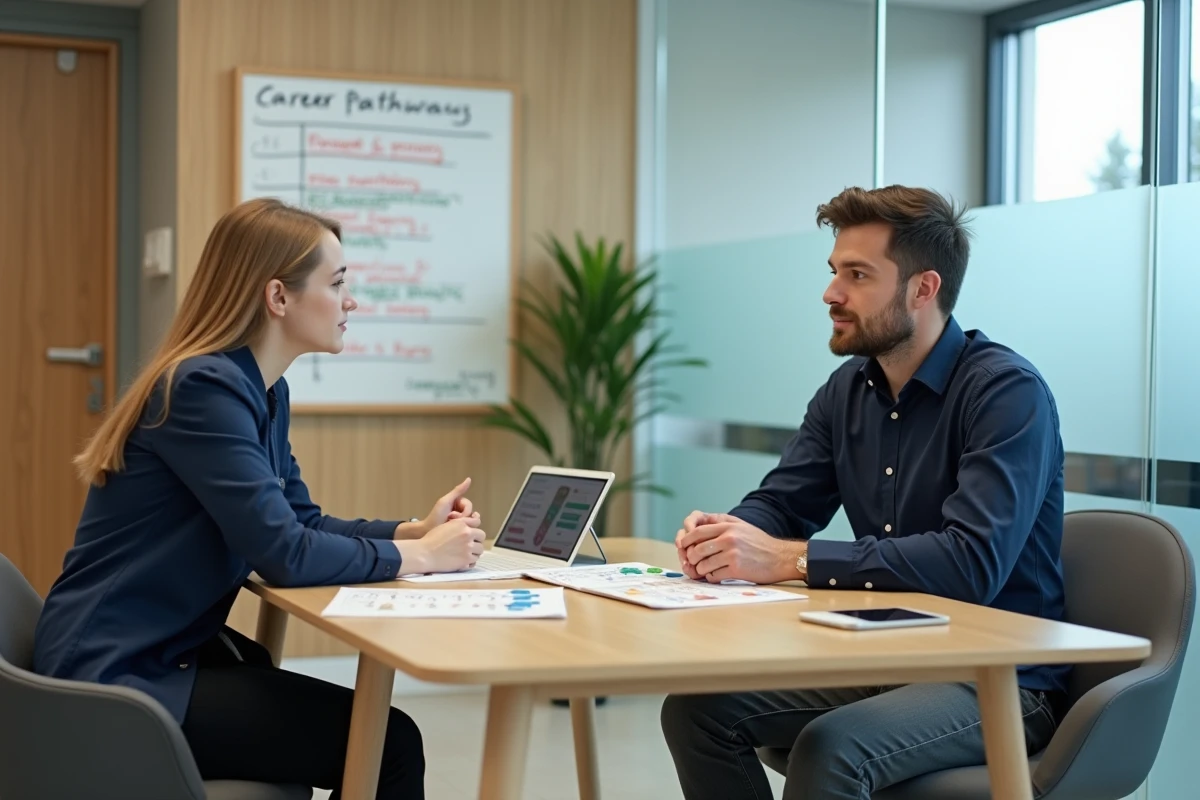
This system has a direct advantage: a student interested in construction can explore maintenance, energy, and civil engineering for a year before deciding. The choice is better informed, and early reorientations decrease.
Shift towards specialties related to ecological transition
According to the DEPP survey published in May 2026, assignment wishes are shifting towards fields in ecological transition, at the expense of more traditional vocational baccalaureates like industrial maintenance. The families of professions related to energy, resource management, and digital professions are concentrating an increasing share of requests.
This shift reflects both the evolution of the job market and a change in perception among students, who increasingly associate these sectors with sustainable opportunities.
Post-9th grade apprenticeship: a rapidly growing alternative
Apprenticeship after 9th grade has seen a significant increase in registrations since the 2025 school year. Two sectors are driving this growth: green sectors and digital.
Choosing apprenticeship means alternating between a training center and a company, with a work contract starting at 15 or 16 years old. The pace is demanding, but the employment rate after obtaining a CAP or a vocational baccalaureate through apprenticeship remains higher than that of the traditional school pathway.
Before committing, several criteria deserve to be checked:
- The availability of host companies in the targeted sector and the student’s geographical area, as without an employer, there is no apprenticeship contract
- The alternating rhythm proposed by the CFA (apprenticeship training center), which varies from one week on, one week off to two days a week depending on the institutions
- The possibility of continuing to a vocational baccalaureate and then to a BTS after a CAP, as apprenticeship is not a dead-end path
Bridges between vocational and general pathways: what reorientations allow
A choice of orientation after 9th grade is not irreversible. Bridges between the vocational pathway and the general or technological pathway exist, and their use is increasing. Successful reorientations from vocational to general 11th grade are rising, including among students from SEGPA.
The reversibility of the pathway is an argument often underestimated in discussions about guidance. A student entering vocational 10th grade can, under conditions of results and with the class council’s opinion, join a general or technological 11th grade.

This possibility does not exempt from serious guidance work beforehand. Bridges work better when the student has maintained a solid level in general subjects during their vocational 10th grade. Educational teams and psychologists from the National Education (former career advisors) support these transitions.
Building an orientation project step by step
The process benefits from being broken down into simple actions, spread over two years (9th and 10th grades):
- Identify two or three sectors of activity that genuinely interest, relying on observation internships and regional career fairs
- Compare access pathways (school pathway, apprenticeship, agricultural education) for each considered profession, as the same diploma can be prepared under different statuses
- Meet active professionals through immersion programs or open days at vocational high schools and CFAs
- Formulate assignment wishes while keeping a coherent backup option, not just a default choice
Orientation is built through the accumulation of concrete experiences, not by a single decision made in March of the 9th grade year. Students who have multiplied contacts with the field before this deadline formulate more adjusted wishes and change pathways less often along the way.