
Hair transplant using stem cells is based on a principle of follicular fragmentation that fundamentally diverges from traditional FUE and FUT techniques. Instead of moving an entire follicle from a donor area to a recipient area, the hair stem cell approach aims to harness the regenerative capacity of a hair follicle fragment to generate new hair at the recipient site, while preserving the donor area.
Follicular Fragmentation and Regeneration: The Technical Mechanism
The principle is based on the fact that a partial graft, taken with a very fine needle, contains enough stem cells from the follicular bulge to initiate a new hair cycle. The donor area retains a fragment of the follicle capable of regenerating a hair, which is the major technical difference from standard FUE where the follicle is extracted in its entirety.
This bilateral regenerative capacity (donor area and recipient area) is documented by the HST method (Hair Stem cell Transplantation), a patented technique. We observe that the scientific literature remains cautious about the reproducibility of these results on a large scale, and that the sustainable creation of new human follicles has not yet been validated as a definitive solution.
This approach should be distinguished from the simple injection of mesenchymal stem cells, often derived from adipose tissue. These two processes do not share the same mechanism of action or the same level of clinical evidence, even though commercial discourse frequently groups them under the single label of “hair stem cells.” As detailed by hair stem cells according to Francoeur, these nuances are crucial for assessing what each protocol can truly offer.
Hair Stem Cells in Switzerland: Regulatory Framework and Clinical Offer
The Swiss framework imposes a strict distinction between innovative cell therapies and routine medical procedures. Swissmedic and the Federal Office of Public Health apply high standards for authorization, traceability, and clinical evaluation before a treatment can be offered outside of a research protocol.
Hair stem cell treatments are not established as a standard of care in Switzerland. This means that clinics offering these protocols do so in a context that is more aligned with experimental regenerative medicine than with conventional hair surgery.
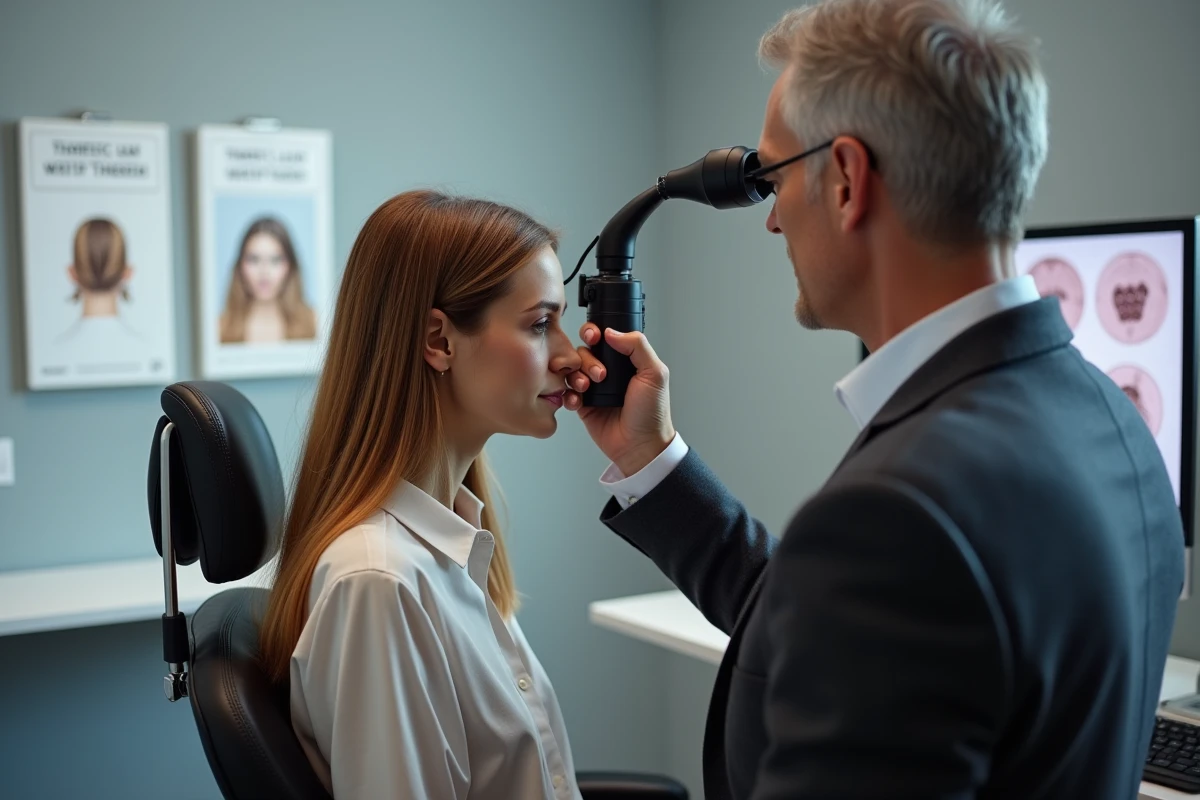
The visible offer mainly focuses on private clinics in Geneva and Lausanne. We observe a strong marketing angle around terms like “regeneration” or “natural regrowth,” while published clinical data remains limited. Several technologies coexist in the Swiss market:
- The Rigenera technology, which relies on an autologous micro-graft through mechanical fragmentation of the follicular tissue, achievable in a single session
- PRP (platelet-rich plasma) injections enriched with stem cells, often presented as a complement to a standard FUE graft
- Protocols based on hair exosomes, extracellular vesicles intended to transport growth factors to weakened follicles
These three approaches do not offer the same degree of validation. The autologous micro-graft has more robust clinical data than exosomes, whose use in trichology remains exploratory.
Classic Hair Transplant vs. Regenerative Protocols: Selection Criteria
FUE remains the reference technique for restoring hair density in balding areas. Its main drawback is the limitation of the follicular capital in the donor area: each extracted follicle does not regrow at the extraction site.
Stem cell-based protocols theoretically address this limitation by preserving the donor area. We recommend not opposing these two approaches as if one renders the other obsolete. In practice, hair stem cells are more of a complement than a replacement for classic grafting.
For a patient with advanced alopecia (Norwood V or higher), the number of follicles needed exceeds what current regenerative protocols can reliably produce. FUE or FUT grafting remains the foundation of treatment, possibly combined with regenerative injections to optimize regrowth and limit postoperative loss.
Combining PRP and Stem Cells After a Graft
The combination of PRP and stem cells post-graft aims to accelerate scalp healing and stimulate grafted follicles during the dormant phase. PRP enriched with growth factors acts on perifollicular vascularization, which can reduce the duration of shedding (temporary loss of grafted hair).
This combination is part of the protocols offered by several Swiss clinics, but its additional benefit compared to PRP alone has not yet been quantified by large-scale controlled trials.
Current Limitations and Perspectives for Hair Transplantation in Switzerland
The gap between marketing promises and clinical reality remains significant. Several points warrant caution:
- The term “stem cells” is used very broadly in clinic communications, encompassing techniques ranging from simple PRP to partial follicular transplantation
- Published results often come from case series with small sample sizes, without a control group
- The durability of results over several years remains poorly documented for purely regenerative protocols
- The cost of these treatments in Switzerland is significantly higher than that of a standard FUE graft, without proportional guarantees on the density achieved
Hair cloning, which would allow for the indefinite multiplication of follicles in the lab, has not yet advanced to the stage of advanced clinical trials. The challenges related to controlling cell differentiation and the orientation of newly formed hair remain unresolved.

Switzerland has a strong biomedical research ecosystem, and several academic groups are working on tissue regeneration. For patients considering hair treatment with stem cells, we recommend checking whether the proposed protocol is based on technology that has been published in peer-reviewed journals, and not to confuse regulated innovation with freely accessible commercial offerings.