
A winter glove protects the hand from the cold through a combination of factors: thermal insulation, fit, water resistance, and the outer material. Choosing a suitable pair requires understanding how these parameters interact, as a thick glove is not necessarily a warm glove, and a warm glove can become useless as soon as it gets wet.
EN 511 Standard: What the snowflake pictogram reveals about a glove
Most labels simply mention “thermal” or “extreme cold” without measurable precision. The EN 511 standard goes further: it assigns three distinct levels, each rated from 0 to 4, corresponding to different properties.
- The first digit measures resistance to convective cold, meaning the glove’s ability to block the ambient cold air circulating around the hand.
- The second digit evaluates contact cold resistance. A glove may effectively insulate against icy air but allow cold to pass through when the palm touches a metal handle or a frozen object.
- The third digit indicates water penetration, tested separately. An insulating glove that absorbs moisture loses a significant part of its thermal effectiveness within minutes.
A glove marked “4.1.0” will perform well against cold air but poorly when in contact with a cold, permeable surface. This detail is particularly important for hiking in slush or biking in the rain, where hands are subjected to wind, the cold contact of the handlebars, and moisture.
When a manufacturer does not mention the EN 511 standard, it becomes difficult to objectively compare two models. Prioritizing a certified glove, even for recreational use, provides reliable information about actual protection.
Insulation, lining, and materials: understanding what keeps warmth
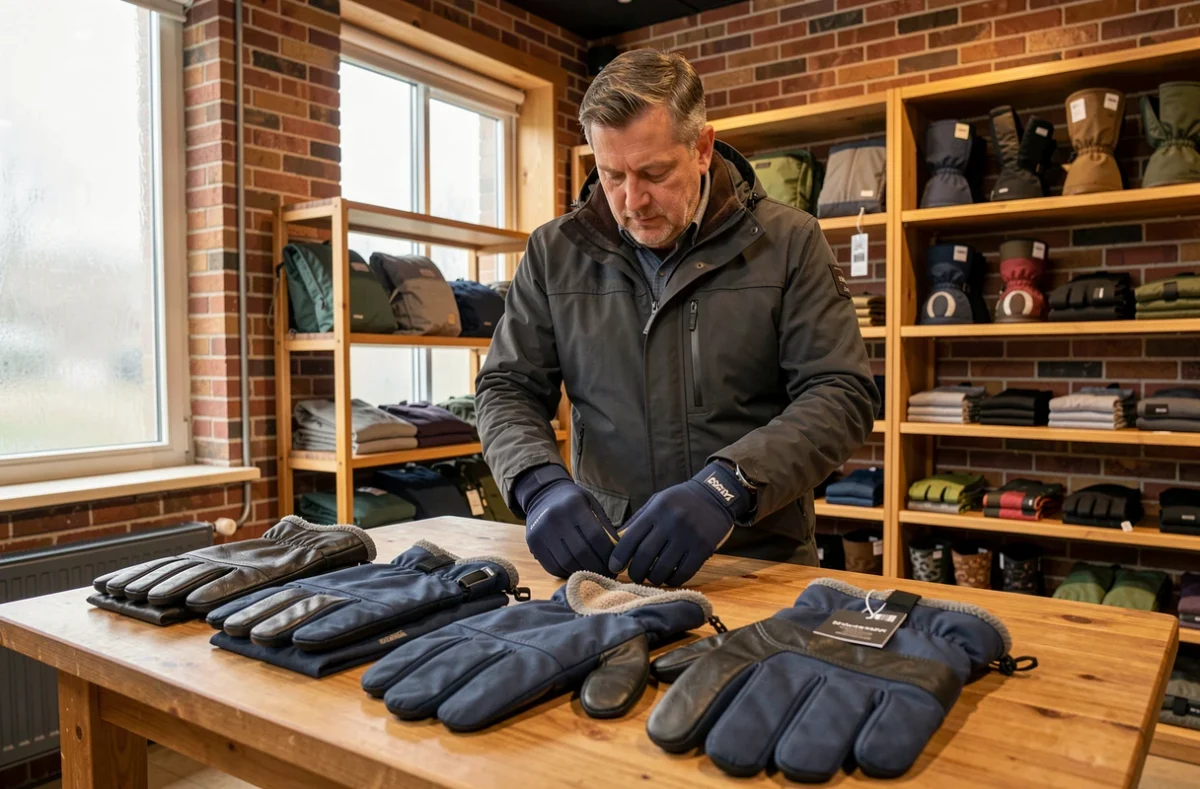
The insulation of a glove relies on its ability to trap air between the hand and the outside. Finding the best gloves for the cold starts with choosing the lining, which plays a more decisive role than the outer material in the sensation of warmth.
Merino wool naturally regulates moisture and retains some of its insulating power even when wet. Synthetic linings (fleece, Thinsulate) dry faster and often offer a better insulation/thickness ratio, preserving dexterity.
The outer material determines mechanical resistance and wind protection. Full-grain leather remains the most effective natural windproof barrier, but it requires regular maintenance to avoid stiffening. Technical textiles with a water-repellent membrane protect against moisture without weighing down the glove.
The trap of PFAS water-repellent treatments
Conventional water-repellent treatments often use PFAS (per- and polyfluoroalkyl substances). French and European regulations are gradually restricting these compounds. For city or leisure gloves, PFAS-free alternatives are now available from several manufacturers, with slightly lower water repellency but sufficient for daily use.
This point deserves attention: a “waterproof” glove treated with PFAS could disappear from the market in the coming years. Checking the composition of the water-repellent treatment allows for anticipating this regulatory change.
Dexterity and fit: the compromise most buyers overlook
A glove that is too thick reduces finger mobility to the point of making certain tasks impossible. Experimental research conducted at the University of Medical Sciences in Iran shows that manual performance decreases when skin temperature drops, even with a suitable glove. The fit of the glove amplifies or mitigates this phenomenon.
A glove that is too loose creates excessive air volume that the body struggles to warm. A glove that is too tight compresses blood vessels and hinders circulation, which accelerates cooling. The correct size leaves about half a centimeter of space at the fingertips, without excess in the palm.
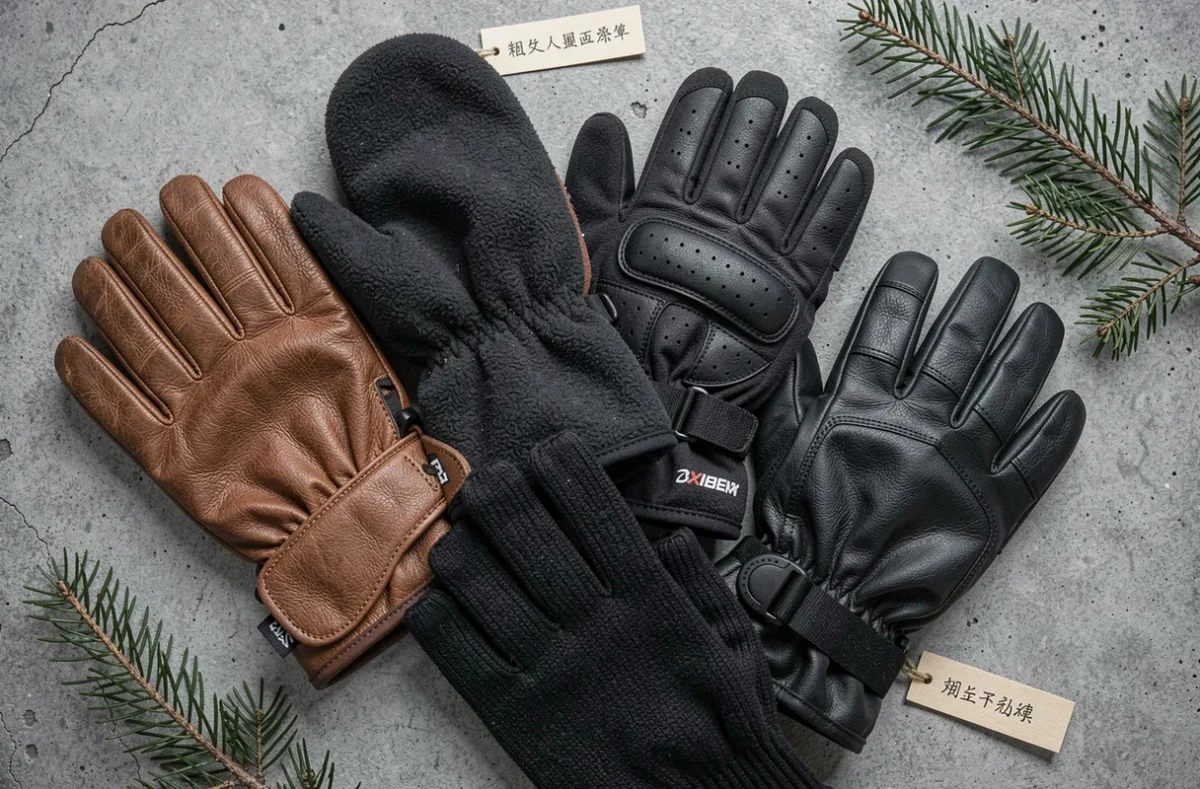
For biking or outdoor photography, dexterity takes precedence over thickness. Models with thin fingers and a soft leather palm offer better control. For winter hiking, a thicker glove compensates for the loss of precision with superior insulation. There is no universal glove: choosing according to the main activity avoids poor compromises.
Gloves or mittens for extreme cold: when shape changes everything
Fingers grouped in a mitten share their body heat, making the mitten objectively warmer than a glove of equal thickness. This thermal gain comes at a direct cost: the near-total loss of dexterity.
For the coldest temperatures (mountain resorts, cross-country skiing, prolonged outdoor waiting), the mitten remains the most effective solution. For urban uses or activities requiring grasping objects, the five-finger glove prevails despite lesser insulation.
Some hybrid models combine a mitten structure with a separate index finger and thumb. This intermediate format is suitable for high-altitude hiking, where handling poles or a camera is necessary without sacrificing too much warmth.
The layering system applied to hands
The principle works like for the rest of the body: a thin wool or synthetic liner wicks moisture away, while the outer glove blocks wind and cold. This system allows for adapting protection to the temperature by removing a layer during exertion or putting it back on at rest.
The liner alone can also be used in transport or indoors, extending the overall usage range.
Choosing a winter glove comes down to three concrete trade-offs: the level of insulation verified by the EN 511 standard, the quality of the lining relative to the outer material, and the fit based on the intended activity. A perfectly fitted glove with an appropriate lining will protect better than a more expensive but poorly sized model.