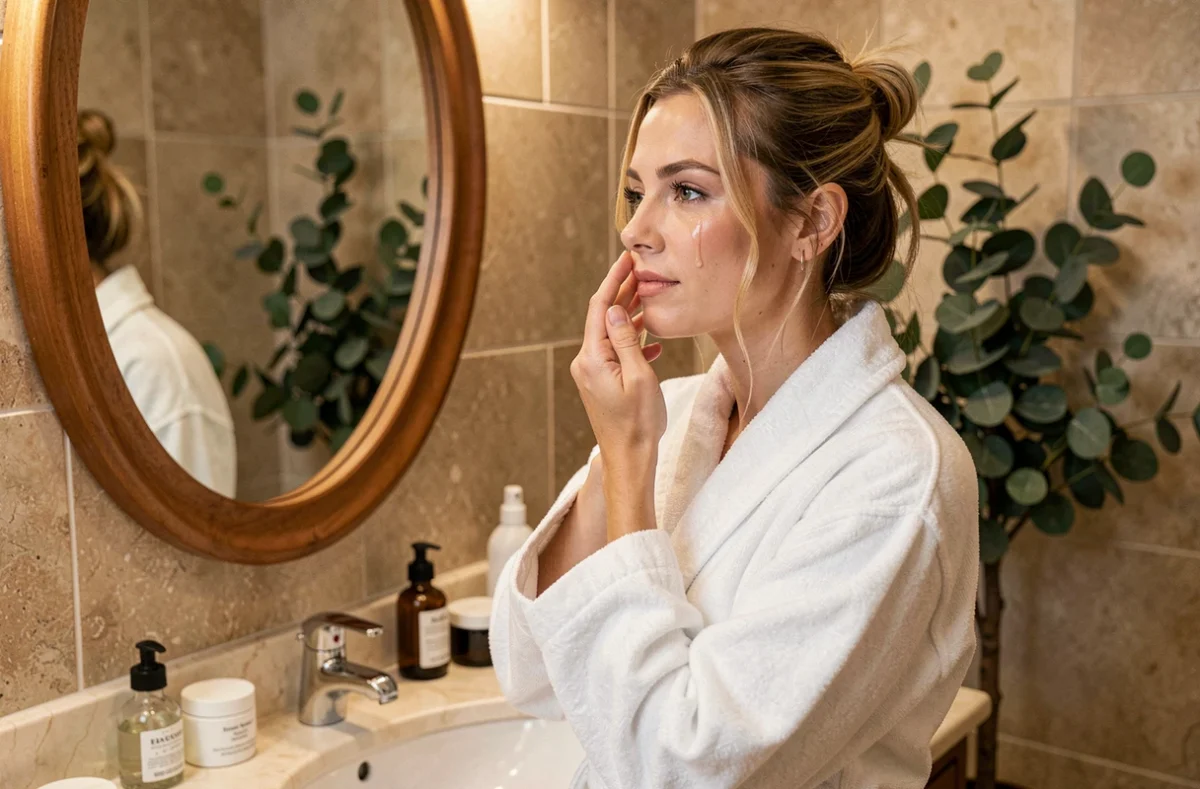
Choosing a skincare treatment suitable for your skin first requires knowing what to measure: skin type, product composition, application frequency. Generic beauty advice is abundant, but its effectiveness depends on variables that are rarely considered together. This article compares the parameters that truly influence a daily skincare routine, incorporating recent criteria such as refillable packaging and new regulatory constraints on environmental claims.
Facial and Body Care: Compared Selection Criteria
An effective beauty routine relies on the match between the product and the skin’s needs. The table below compares the main skincare gestures according to the area concerned, the type of product to prioritize, and the recommended frequency.
| Area | Gesture | Suitable Product Type | Frequency |
|---|---|---|---|
| Face | Cleaning | Makeup remover or gentle gel | Morning and evening |
| Face | Moisturizing | Cream or serum according to skin type | Daily |
| Face | Exfoliation | Gentle enzymatic or mechanical scrub | Once or twice a week |
| Body | Moisturizing | Body lotion or balm for dry skin | Daily after showering |
| Eyes | Targeted care | Anti-puffiness or anti-dark circle eye cream | Morning and/or evening |
What stands out from this comparison: application frequency is as important as product choice. A high-end serum used once a week will provide less benefit than a basic cream applied daily on properly cleansed skin.
Beauty routines for the face and body differ on a often overlooked point. The skin on the face, being thinner and more exposed, reacts more to formulation changes. Frequently alternating facial products disrupts the skin barrier, while the body tolerates variety better.
Resources like sos-beaute.com help identify suitable treatments for each skin type without multiplying costly trials.

Natural Products and Conventional Care: Real Differences on the Skin
The distinction between natural and conventional care fuels much marketing discourse. In practice, the difference lies in composition and skin tolerance, not in an intrinsic superiority of one over the other.
A product labeled “natural” may contain plant allergens (important oils, for example) that irritate sensitive skin. Conversely, a lab-formulated treatment with synthetic actives may offer better tolerance due to precise dosing.
- Natural care: preferred for normal to combination skin that tolerates plant extracts well, suitable for minimalist routines
- Conventional care: more suitable when the skin has specific needs (blemishes, marked dryness, redness), as the actives are calibrated for a given problem
- Hybrid care: some brands combine a natural base with a targeted active (biotechnological hyaluronic acid, for example), a compromise that is gaining ground
The determining criterion remains reading the INCI list on the packaging. A suitable treatment is chosen based on composition, not on the slogan.
Environmental Claims: What Changes for the Consumer
The European directive 2024/825, known as EmpCo, applies from September 27, 2026. It regulates generic environmental claims and prohibits presenting a product as climate-neutral when this neutrality relies solely on carbon offsetting.
For the consumer, this means that vague mentions (“eco-friendly,” “green,” “planet-friendly”) without verifiable proof become legally risky for brands. Private sustainability labels not certified by an independent organization are also targeted. In practice, a product making an environmental claim will need to document it transparently.
Refillable Packaging: A Beauty Gesture That Has Become a Purchase Criterion
Refillable packaging is no longer just a marketing argument. According to the Senseva-FEBEA study from June 2025, cited by Nouvelles Esthétiques in September 2026, its adoption is progressing but remains hindered by concrete obstacles: limited availability in stores and lack of information on the relevant categories.
The useful gesture before replacing a container: check if a compatible refill exists. This simple reflex avoids repurchasing a whole bottle and reduces the volume of plastic waste associated with the beauty routine.

Refill and Reuse: Two Distinct Logics
Refilling involves filling a container kept at home. Reuse, as structured by the Coalition for Cosmetic Reuse documented by Circul’R in September 2026, involves a logistics of collection, cleaning, and health traceability managed by specialized actors.
This distinction matters for a consumer concerned about consistency. A refillable bottle purchased online is not a reused container in the industrial sense. Both approaches reduce waste, but at different scales and with different health guarantees.
Daily Beauty Routine: Mistakes That Nullify the Benefits of Treatments
Applying the right products is not enough if certain gestures sabotage their effectiveness. Three common mistakes occur in facial and body care routines.
- Layering too many products in the morning: beyond three layers (cleanser, serum, cream), actives neutralize or clog pores, especially on combination to oily skin
- Neglecting sun protection daily: even in winter, UV rays accelerate skin aging and reduce the effect of anti-blemish or brightening treatments applied the day before
- Changing routines every month: facial skin generally takes several weeks to react to a new treatment, a delay rarely respected due to impatience
An effective beauty treatment relies more on consistency than on the quantity of products. Two or three well-chosen products, applied daily in the correct order, yield visible results over time.
The most underestimated parameter remains the quality of cleansing. A poorly cleansed face in the evening prevents any nighttime active from penetrating properly. Investing in a good cleanser suitable for your skin type, rather than an expensive serum, often constitutes the most cost-effective lever for a daily beauty routine.