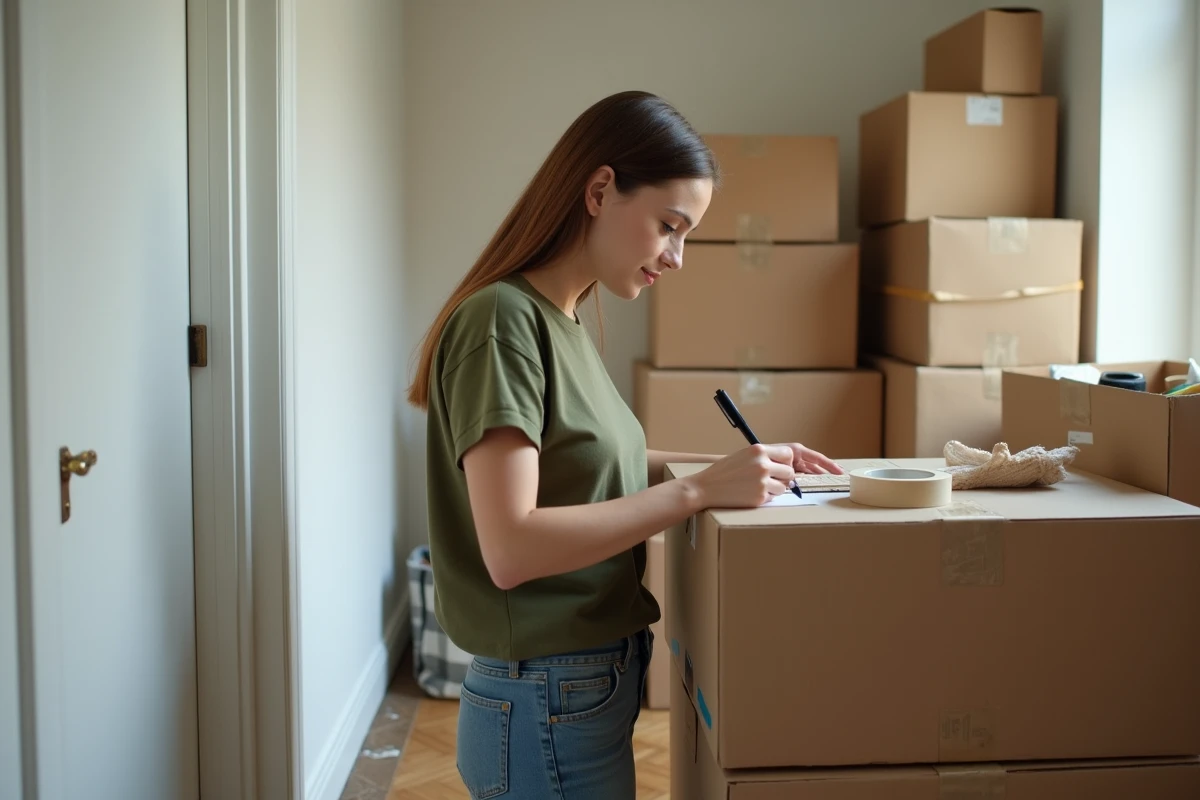
After purchasing flat-pack furniture, Ikea boxes accumulate quickly. Their often elongated format, suited for bookshelf tops or bed legs, makes them cumbersome in a standard apartment. The question of sorting arises quickly, but it masks a more concrete issue: should these boxes be recycled or should we look to reuse them before sending them to the dump?
Ikea Boxes and Municipal Collection: What Traditional Pickup Often Misses
Most French municipalities organize paper and cardboard collection, but the methods vary. Some limit the volume accepted per pickup, while others refuse boxes that exceed the dimensions of the bin. Ikea furniture packaging, sometimes over a meter long, poses a practical problem during door-to-door collection.
User feedback, particularly on community forums, shows that boxes left out on collection day are sometimes simply not picked up. Collection agents apply strict guidelines on packaging: an unflattened, unstrapped, or oversized box may remain on the sidewalk.
Flattening and cutting the boxes into pieces that fit in the bin remains the most reliable method for the traditional circuit. A sturdy cutter and a few minutes are enough, but with around ten furniture boxes, the process takes time. For those looking to get rid of Ikea moving boxes quickly, this cutting step is often the real bottleneck.
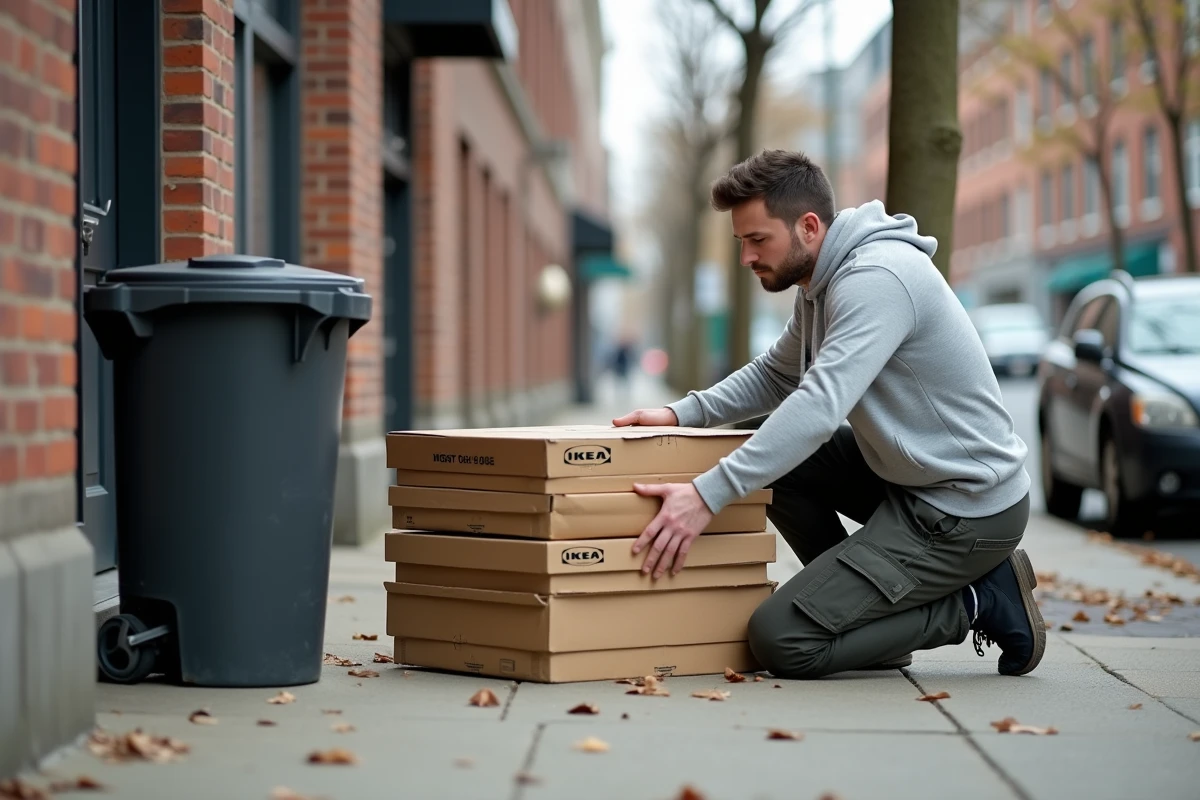
Recycling Centers and Local Facilities: Underutilized Circuits for Boxes
Municipal recycling centers accept clean, empty boxes without size restrictions. This is the most direct option when the volume is too large for the sorting bin. In Paris, some recycling centers even offer to collect still usable boxes, separate from the pure recycling stream.
Reuse before recycling is the priority logic promoted by local authorities in recent years. Complementary initiatives exist, such as the Parisian Trimobile or occasional collections organized at building entrances, which facilitate disposal without a trip to the recycling center.
Local Resource Centers and Recycling Facilities
Resource centers collect boxes in good condition to redistribute them locally. A clean, undamaged Ikea box retains enough rigidity for a second use in packaging or storage. These structures, present in most urban areas, operate on a donation principle.
The advantage over recycling centers: the box is not destroyed. It re-enters a usage circuit, reducing the consumption of raw materials. Field feedback varies on this point, as not all resource centers accept large formats or have the necessary space to store them. A prior call avoids unnecessary trips.
Resale and Donation Between Individuals: A Discreet but Active Market for Moving Boxes
Moving boxes are resold or given away on local classifieds platforms and neighborhood groups on social media. The demand exists: anyone preparing for a move is looking for sturdy boxes at a low cost. Ikea boxes, designed to protect heavy furniture pieces, offer superior strength compared to standard food packaging boxes.
A clean and intact Ikea box is easily given away or resold on Facebook groups dedicated to reuse, like those that exist in most French cities. The model is simple: a photo, a location, a pickup time. Lots generally go within a few hours.
- Local Facebook groups like “donations and pickups”: the fastest channel to offload a stock of boxes all at once
- Free classifieds sites: allow reaching a wider audience, but the pickup time is often longer
- Word of mouth in the building or neighborhood: posting a note in the lobby remains effective, especially during back-to-school or lease-end periods

Moving Companies: Taking Back Used Boxes as a Concrete Option
Some moving companies take back used boxes to reintegrate them into their own circuit. This practice, still little known to the general public, allows for significant volume disposal in a single operation. The principle varies by provider: some buy back boxes in good condition, while others collect them for free.
Collection by a professional mover avoids cutting and transport to the recycling center. For lots of more than ten boxes, it is often the fastest solution. Available data does not allow for a conclusion on the generalization of this practice, but recent sources indicate a growing trend among operators keen to reduce their costs for new supplies.
Typical Collection Conditions
- Clean, dry boxes, free from food residue or mold
- Flattened for easier transport and storage
- Minimum volume sometimes required (varies by provider)
- Home pickup offered by some movers, subject to geographical conditions
A call to the local mover or a quick search on professional directories is enough to verify if this option exists in your area.
Temporary Storage of Ikea Boxes: Limits and Precautions
Keeping boxes “just in case” is a common reflex, but prolonged storage of boxes in a garage or damp basement renders them unusable in a few months. Corrugated cardboard absorbs moisture, loses its rigidity, and can develop mold. A box stored flat, in a dry and ventilated place, retains its properties for a long time.
If you anticipate another move or a renovation project in the coming months, keeping a few well-folded Ikea boxes makes sense. Beyond six months without planned use, it’s better to dispose of them through donation or recycling than to let them degrade.
Sorting boxes after an Ikea purchase is not complex, but it benefits from being done quickly. The longer a box remains intact and clean, the more valuable it is for a second user or a take-back circuit. Waiting turns a reusable resource into waste.