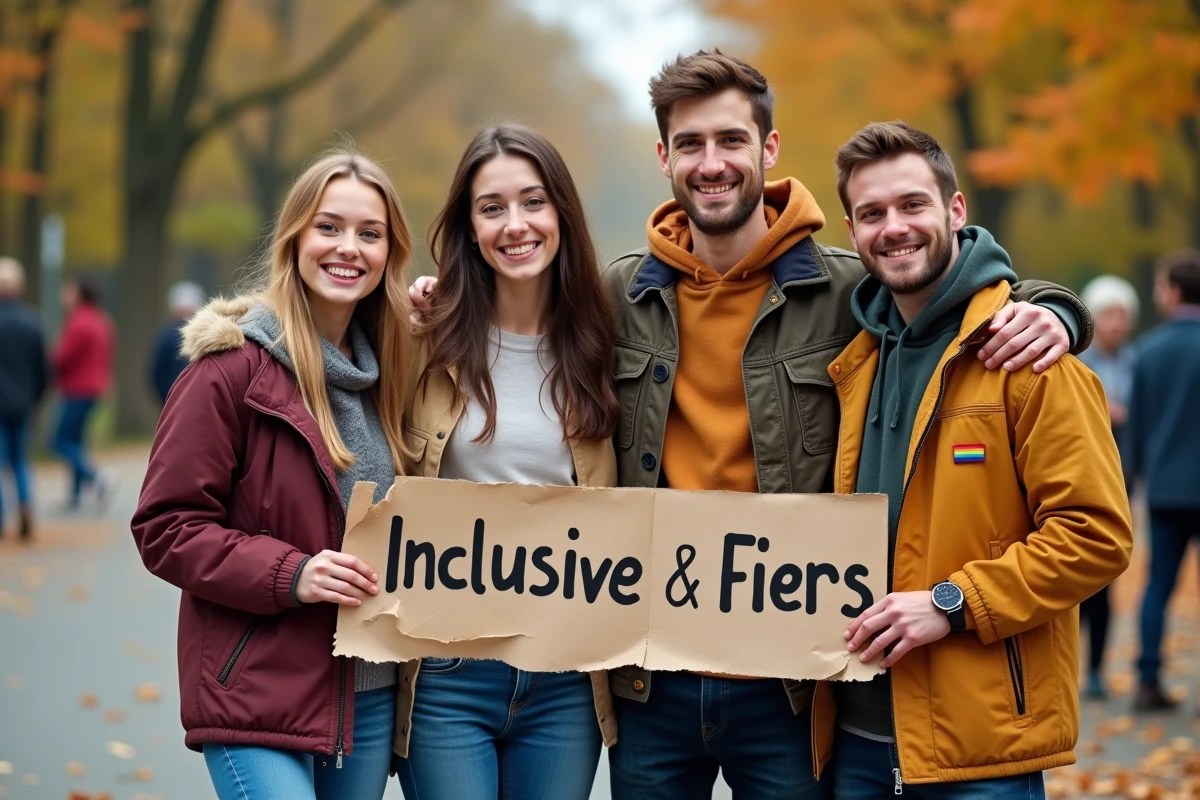
In France, reports of homophobic and transphobic violence among young people have been on the rise since 2024, according to the 2025 annual report from SOS Homophobie. This increase, fueled by heightened polarization on social media, places the issue of support for LGBTQIA+ youth at the center of educational and social concerns.
Digital peer-to-peer support for LGBTQIA+ youth in rural areas
Historical associative structures are concentrated in large urban areas. For a queer teenager living in a rural community, the nearest physical listening point may be over an hour away, with no suitable public transport. This geographical gap creates a blind spot in support.
Anonymous peer support apps are attempting to fill this gap. The principle is based on decentralized connections: a questioning youth exchanges with a trained peer, without appointments or travel. Anonymity removes the barrier of involuntary outing, particularly feared in environments where social visibility is high.
Field feedback varies on the actual effectiveness of these systems. In Quebec, the Émergence Foundation documented in its 2025 activity report a decrease in suicide attempts among trans youth followed by peer-to-peer programs in rural areas since mid-2024. These encouraging results are linked to a specific context, and their transposition to the French framework is not automatic.
Associations like MAG Jeunes LGBT+ offer resources and exchange spaces accessible online via https://www.mag-paris.org/, which allows reaching young people beyond the Paris region.

School absenteeism and trained ally policies: what international comparisons show
The link between a hostile school climate and dropout rates among LGBTQIA+ students has been documented for several years. The UNESCO report “Education for All” 2025 provides a comparative insight rarely utilized in France: Nordic countries like Sweden have significantly reduced school absenteeism among LGBTQIA+ youth through systematic ally training programs among educational staff.
The Swedish model is based on three concrete pillars:
- Mandatory training for all school staff (teachers, school counselors, administrative staff) on the realities of discrimination related to sexual orientation and gender identity
- The designation of an identified reference person in each establishment, to whom a student can turn without going through the traditional hierarchy
- A reporting protocol for LGBTphobic acts distinct from the general disciplinary circuit, to prevent the victim from facing direct confrontation
In France, the circular from the Official Bulletin of the Ministry of National Education of 2025 established a framework to strengthen the support for LGBTQIA+ students in schools. The available data does not yet allow for measuring the concrete impact of this text on the ground.
Workplace discrimination and corporate commitment to LGBTQIA+ inclusion
Inclusion does not stop at high school graduation. For LGBTQIA+ young adults entering the job market, the professional environment remains a place of frequent discrimination, whether through remarks, exclusion, or barriers to promotion.
The LGBTQIA+ Commitment Charter promoted by L’Autre Cercle is one of the most structured tools in France. Signatory companies commit to measurable actions: training for managers, inclusion in diversity policies, support for internal LGBT+ employee networks. The initiative has the merit of formalizing commitments, but its effect largely depends on the genuine willingness of each organization beyond the signature.

Pride and visibility in the workplace: beyond the month of June
Participation in pride marches or displaying rainbow logos during Pride month is not enough to transform a company’s internal culture. Credible commitment is measured over twelve months, not just one. Initiatives that produce lasting effects are those that impact HR processes: inclusive recruitment, respect for chosen names for trans individuals, tailored health coverage.
A queer employee who does not feel safe discussing their personal life at work endures a constant cognitive load. This forced invisibility affects performance, well-being, and retention. Companies that take this issue seriously also gain attractiveness among younger generations, for whom diversity and respect for gender identity are part of the criteria for choosing an employer.
Social media and polarization: a double-edged sword for queer youth
Digital platforms provide LGBTQIA+ youth with access to communities, testimonies, and resources that they may not always find around them. For many, it is in these spaces that the first step of identity construction takes place.
However, these same platforms concentrate a growing share of violence. The 2025 report from SOS Homophobie highlights that polarization on social media directly contributes to the rise in reports of homophobic and transphobic violence among young people. Recommendation algorithms tend to amplify divisive content, exposing questioning adolescents to targeted hate speech.
Moderation remains insufficient on most major platforms. Reporting tools exist, but their effectiveness varies, and processing times leave harmful content online for hours, sometimes days. Online peer support systems take on their full meaning here, providing a protected space where generalist networks fail.
The European regulatory framework is evolving, but the concrete effects on the protection of LGBTQIA+ minors online remain to be documented. Responsibility cannot rest solely on the youth themselves or on associations: it also involves platforms, educational institutions, and public authorities in a coordinated prevention approach.