A garden storage box made of resin for under a hundred euros and an aluminum model three times more expensive offer the same protection against the elements after two winters? The answer depends on the material, the locking system, and the type of lid, three parameters that vary greatly from one brand to another. Comparing garden storage box offers based on these criteria allows for a sustainable choice without overpaying for unnecessary storage volume.
Resin, wood, or aluminum: comparative table of materials for garden storage boxes
| Criterion | Resin (polypropylene) | Softwood | Aluminum |
|---|---|---|---|
| Weather resistance | High (no warping) | Medium (risk of swelling without treatment) | Very high |
| Maintenance | Water cleaning | Stain or oil every 1-2 years | Almost none |
| Price range | Entry and mid-range | Mid-range | High-end |
| Weight | Light | Heavy | Medium |
| Appearance | Varied colors (anthracite, gray, beige) | Natural, visible aging | Sober, straight lines |
| Available recycled content | Increasing (post-consumer plastic) | Certified wood possible | Recyclable but rarely made from recycled materials |
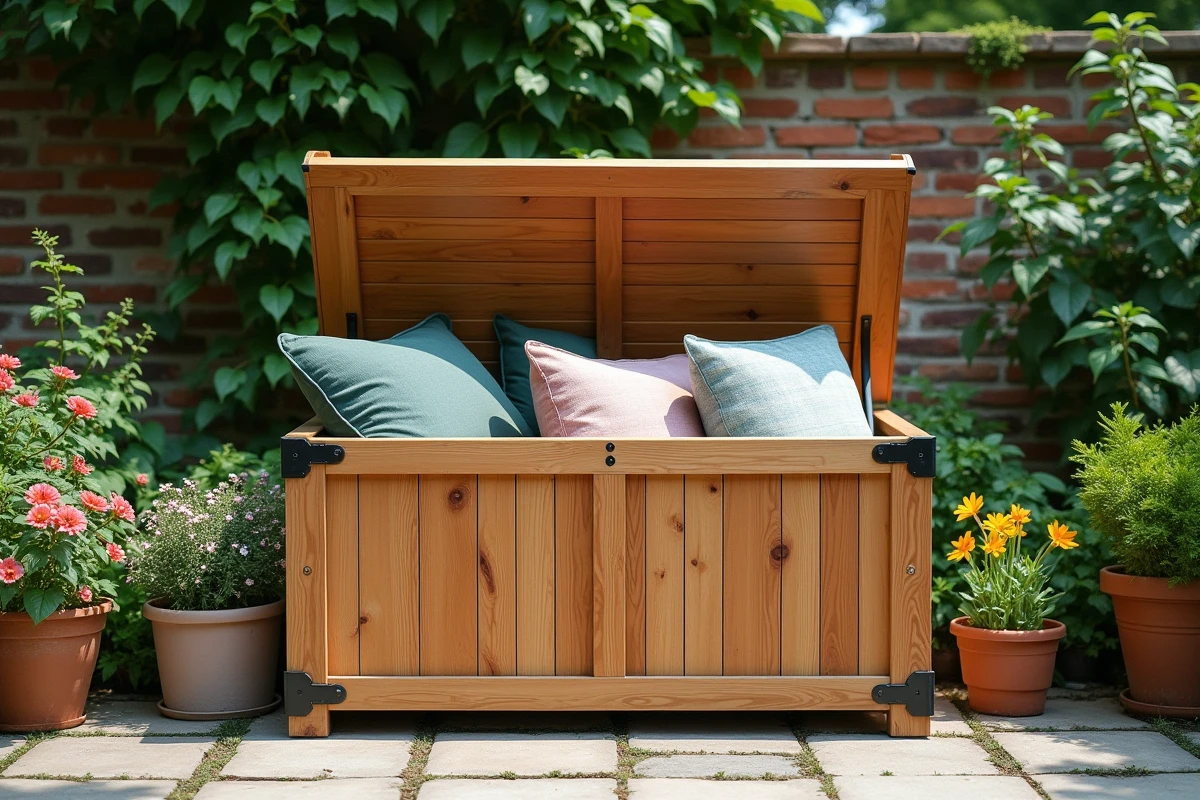
Resin boxes that imitate wood maintain their waterproofing better over time than untreated softwood boxes. Beyond two wet winters, the untreated wooden lid may warp and allow water to seep in through the hinges. Resin does not have this flaw.
To explore an accessible price range, the garden storage boxes available at Brico Dépôt offer resin and treated wood models that cover most common uses.
Aluminum remains the most durable material, but its high price is aimed at homeowners willing to invest in the long term. For seasonal or rental use, resin offers the best balance between longevity and budget.
Waterproofing and locking of the garden storage box: what really changes the price
The price of a garden storage box does not always reflect its storage volume. Two boxes of identical capacity can show a significant price difference if one includes a lid seal and an assisted opening mechanism, and the other does not.
The elements that increase the cost without adding liters of storage:
- A peripheral seal under the lid, which guarantees waterproofing even in the case of prolonged heavy rain
- Pneumatic struts to keep the lid open, useful when storing heavy items with two hands
- A locking system compatible with a padlock or integrated lock, which conditions insurance coverage
- A ventilated or raised bottom, which prevents condensation and protects cushions from moisture
A box without a key lock may exclude its contents from your home insurance. Several French insurers specify in their general conditions that items stored in a garden storage box are only covered against theft if the box is fixed to the ground or wall and equipped with a key lock or approved padlock.
Cushions or items left in a simply clipped box may be excluded from compensation in the event of theft. This point deserves verification before purchase, especially for seasonal rentals where the contents of the box have a significant cumulative value.
Outdoor storage box: useful volume and floor space
The announced capacity in liters does not tell the whole story. A deep but narrow box complicates access to items at the bottom. Wide and shallow models allow you to find a tool without emptying half the contents.
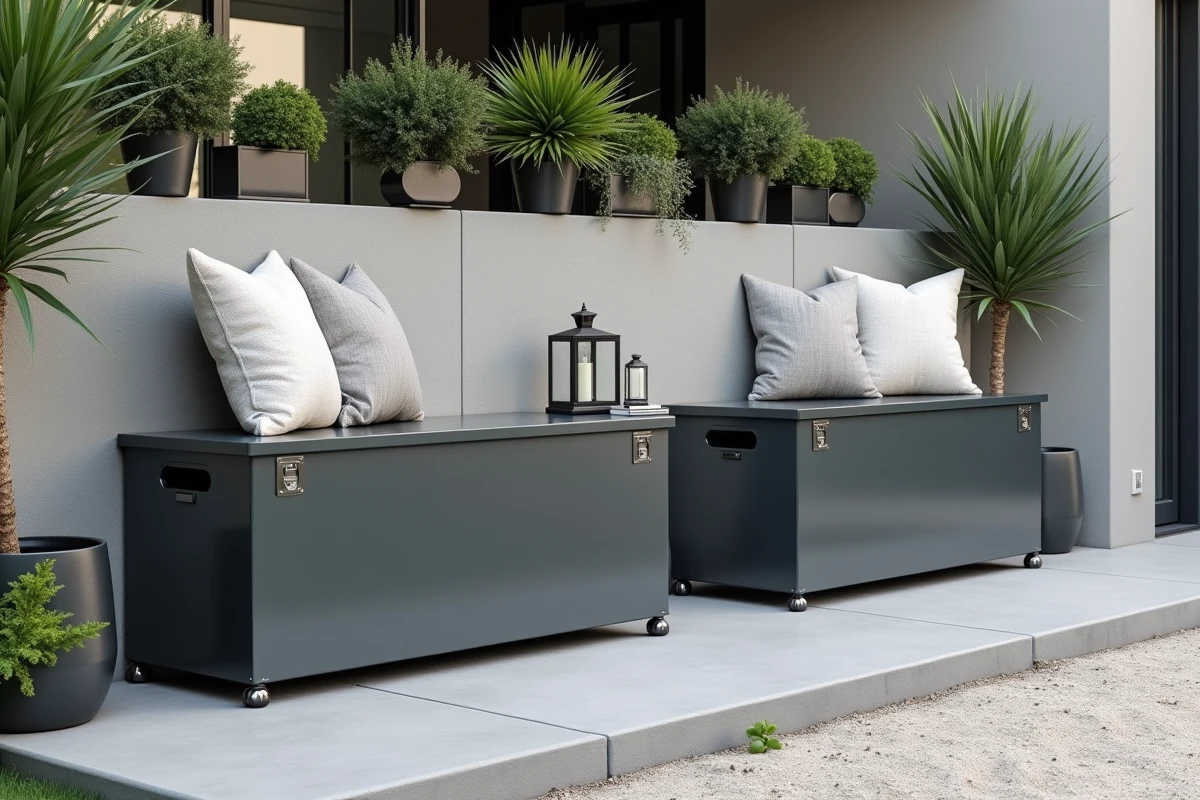
For a balcony or small terrace, a modestly sized storage bench is more functional than a large box that blocks the passage. Brands like Keter offer bench formats that serve as seating while providing integrated storage, saving floor space.
Adapting the volume to the actual contents
Before choosing a garden storage box, listing what it needs to contain helps avoid oversizing. A few cushions and a tablecloth do not justify the same volume as a cantilever umbrella, pool toys, and a hose.
Holiday rental managers recommend two medium boxes rather than one large one, to separate gardening equipment (dirty, damp) from outdoor linens (cushions, throws). This organization limits cross-contamination and extends the lifespan of textiles.
Eco-design and recycled resin: what changes for garden storage box offers
Decree No. 2024-1018 of November 29, 2024, implementing the AGEC law, strengthens eco-design requirements for building-related products. Several manufacturers of resin garden storage boxes have begun to incorporate a proportion of post-consumer recycled plastic into their models and to mention this information on product sheets.
This evolution has a concrete impact on the available offer in stores. Boxes featuring a share of recycled material do not necessarily cost more than classic models, but their availability remains uneven across brands.
For consumers, checking the product sheet allows you to distinguish a box made with virgin polypropylene from a model incorporating recycled material. Environmental labeling on outdoor furniture will become widespread in the coming years, making comparison easier.
Recycled resin and mechanical durability
The integration of recycled plastic does not degrade the mechanical strength of the box if the manufacturer adheres to the mixing ratios. Models tested after two full seasons show no difference in durability compared to versions made from virgin resin.
Ultimately, the choice of a garden storage box depends on three considerations: material suited to the local climate, locking system compatible with your insurer’s requirements, and volume calibrated to the actual contents. A model made of recycled resin with a strut and lock covers most needs without requiring special maintenance.