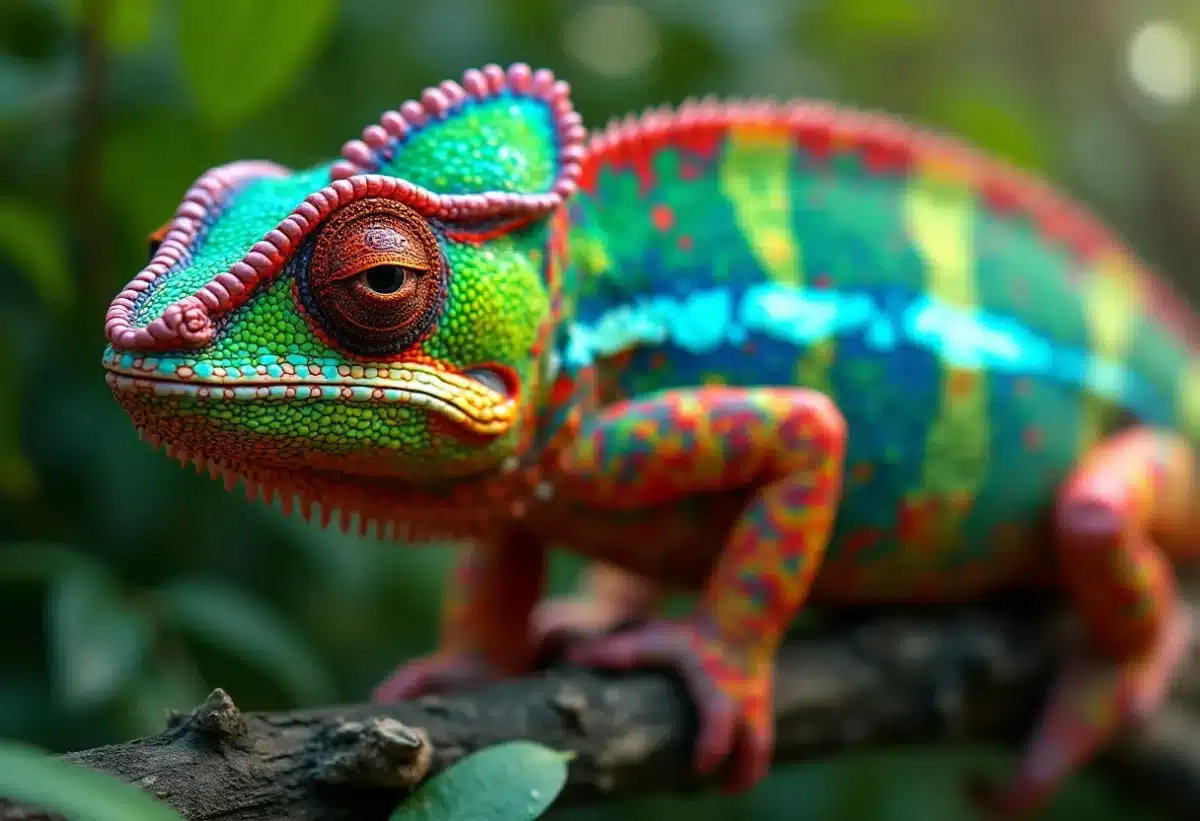
In the vast African expanses, nature reveals a stunning palette of colors through creatures as rare as they are fascinating. Among them, the panther chameleon, adorned with a kaleidoscope of vibrant hues, blends into the lush landscapes of Madagascar. Its ability to change color for communication or camouflage illustrates the ingenuity of evolution.
Not far away, African rivers are home to the butterfly fish, an aquatic marvel with translucent, iridescent fins. These species, far from the usual clichés, reveal a vibrant and mysterious biodiversity, testifying to the unparalleled richness of the African continent.
Species with Stunning Colors
Africa, the cradle of wildlife, is home to species with colors and patterns that defy imagination. A striking example is the black leopard, often referred to as the black panther. Unlike its cousin the leopard, whose coat is spotted with black, the black leopard displays a coat that, at first glance, appears solid. This unique appearance results from a high density of overlapping spots.
Another animal with remarkable morphology is the Cape aardvark. Resembling a pig with rabbit ears, this nocturnal animal is an iconic species of the African savannas. The honey badger, on the other hand, is known for its fearless character and contrasting black and white stripes.
Colors for Protection and Blending into the Environment
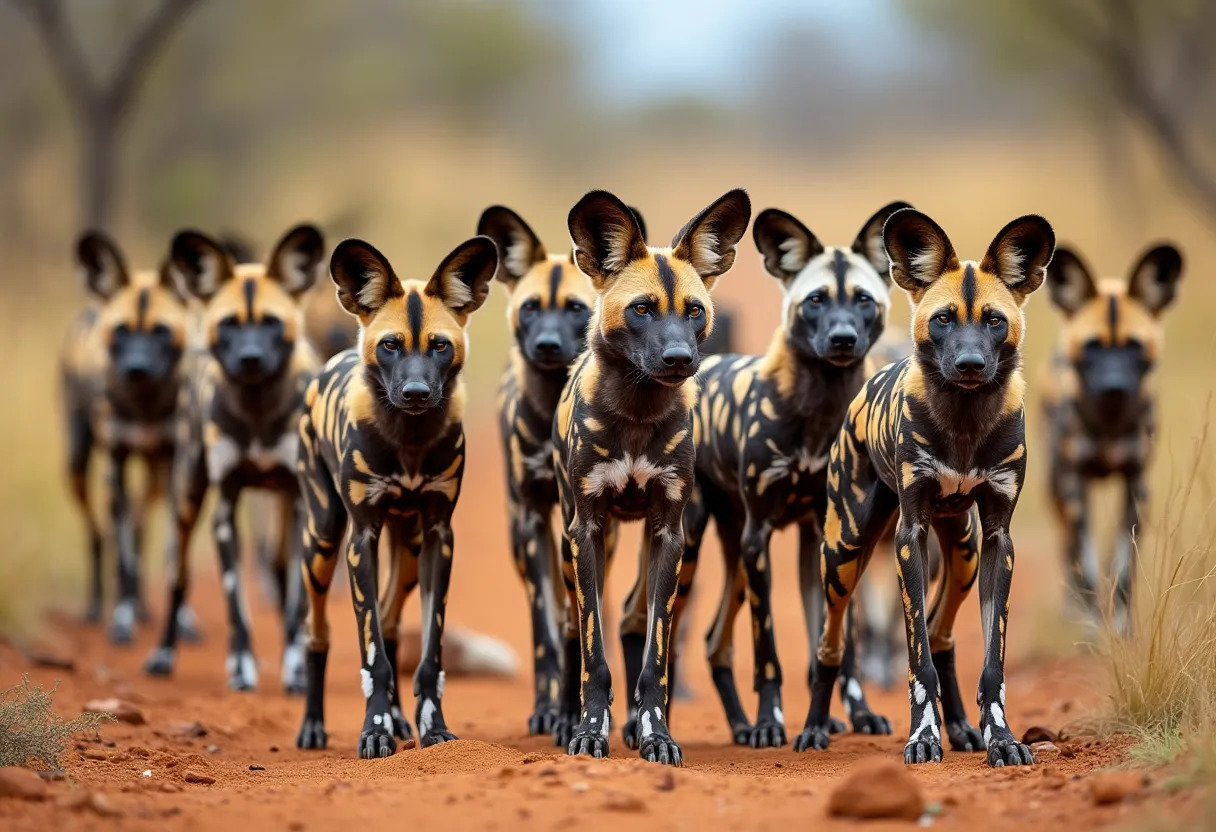
Surprising colors are not solely the domain of mammals. The African wild dog sports a multicolored coat, incorporating shades of brown, black, and white, allowing it to effectively camouflage in the varied landscapes of sub-Saharan Africa. This pack-living canid is a feared predator known for its cooperative hunting strategy.
- The serval, an agile feline with long legs, uses its black spots on a golden background to hide in tall grasses.
- The pangolin, covered in scales, protects itself with its discreet colors that make it nearly invisible at night.
African wildlife is not limited to mammals. Birds, reptiles, and fish also compete in terms of colors and adaptations. A notable example, the panther chameleon from Madagascar, although excluded from strictly African fauna, wonderfully illustrates this vibrant biodiversity.
In contrast, the expression baboon butt refers to the bright colors of certain primates’ rear ends, a distinctive trait used for communication within social groups.
Their Role and Adaptation in the Ecosystem
The chromatic diversity of African animals is not just an aesthetic curiosity. These surprising colors of African wildlife play a fundamental role in the adaptation and survival of species. Take the African buffalo: its curved horns are not only impressive, they serve to defend the herd against predators, particularly lions.
The African savanna elephants, recognizable by their imposing size, are architects of their environment. By feeding on vegetation, they alter the landscape and create clearings, thus promoting biodiversity. Their role is even more crucial in ecosystems such as the Okavango Delta.
Critically Endangered Species
Black and white rhinos are critically endangered, primarily due to poaching. Their preservation is essential for maintaining the ecological balance of the regions they inhabit. The northern white rhino is particularly threatened, with only two individuals remaining.
Conservation efforts in protected areas like Kruger National Park or the private Sabi Sand reserve in South Africa are significant. These places are home to the famous Big Five (lion, elephant, leopard, rhino, buffalo), an iconic group that attracts eco-tourists from around the world.
- Kruger National Park is a great place to observe the Big Five.
- The Moremi Reserve also houses these iconic species.
- Chobe National Park has the largest population of elephants in Africa.