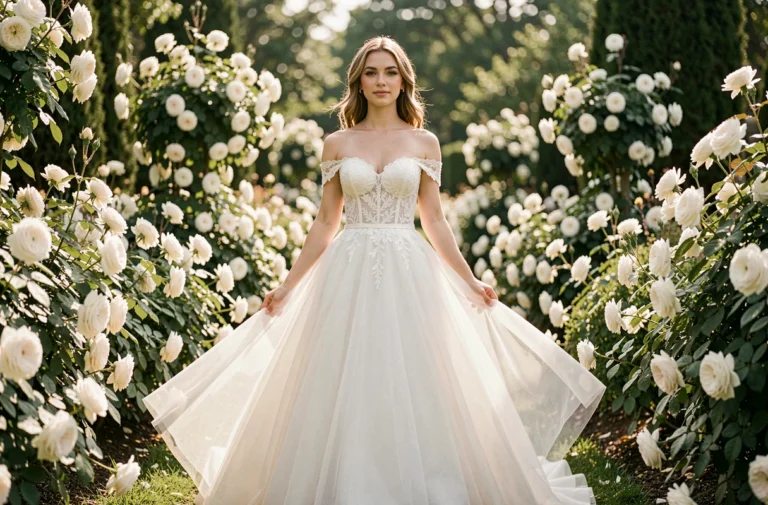
The length of a dress is measured in centimeters, from the top of the garment to the hem, following the body. This measurement determines the final fall, and an error of just a few centimeters can turn a midi dress into one that is too short for the intended occasion. Taking your measurements at home requires little equipment, but a precise method.
The hollow of the neckline: starting point for measuring a dress
Online guides often mention measuring “from the shoulder.” The problem is that the shoulder is not a fixed point. Depending on the build, the thickness of the fabric, or the cut of the garment, the edge of the shoulder can shift by several centimeters.
The reliable reference point is the hollow of the neckline, this small bony depression located between the two collarbones, at the base of the neck. It is the starting point used in pattern making to calculate the length of a worn garment. If you understand how to measure the length of a dress from this anatomical reference, your results will be reproducible from one dress to another, regardless of the shape of the neckline.
To take the measurement, place the end of the tape measure on this hollow and let it descend along the bust, then down the leg, to the desired hem height. The tape should follow the line of the body without being tight or loose.
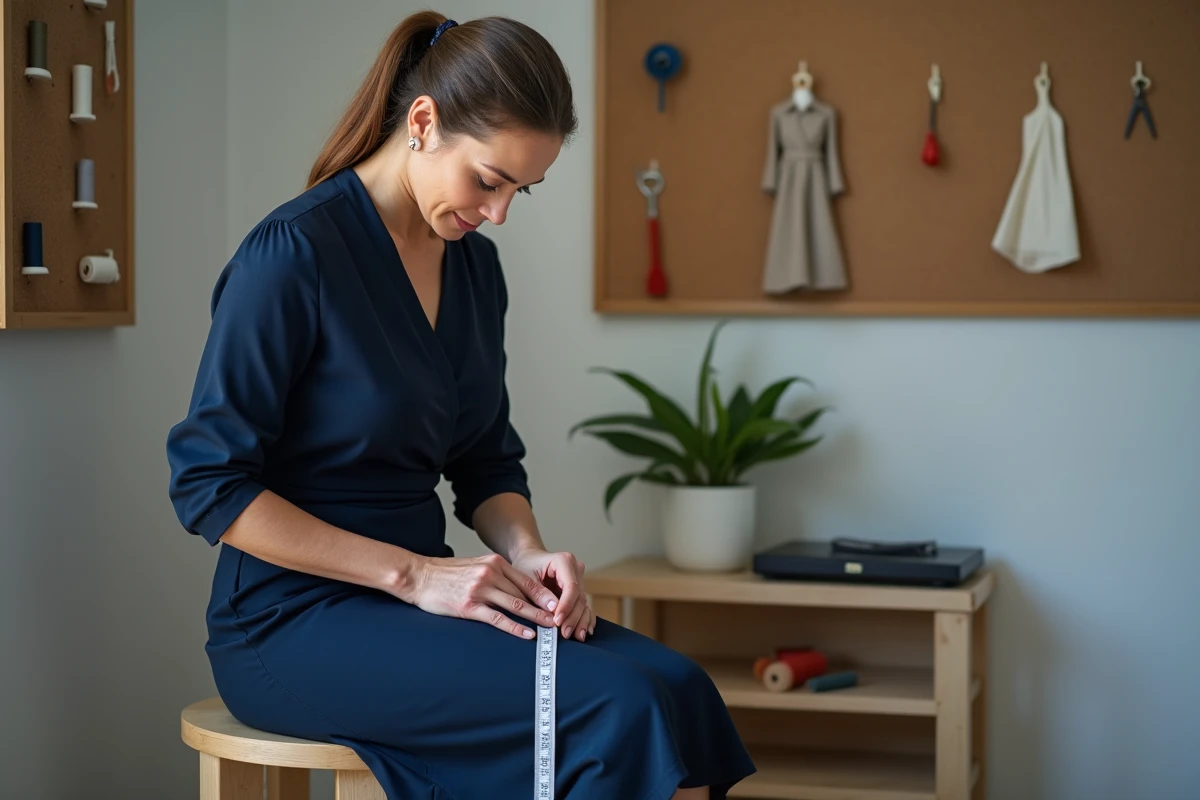
Flexible tape measure and upright posture: the conditions for reliable measurement
The minimal equipment is a flexible sewing tape measure, graduated in centimeters. Rigid DIY tape measures distort the measurement because they do not follow the curves of the body. If you only have a piece of string on hand, mark the length on it and then transfer it to a flat ruler.
Posture and underwear
Stand up straight, feet together, back straight, arms relaxed at your sides. Wear the underwear you will be wearing with the dress, especially the bra: it alters the position of the bust and thus the length measured from the hollow of the neckline.
Remove your shoes to obtain the raw measurement. The height of the heel is then added separately, allowing you to calculate the correct length according to the shoes planned for the occasion.
Why measure two or three times
A slight shift in posture between two attempts can easily generate a difference of one to two centimeters. Take the measurement at least twice and keep the value that recurs. If possible, ask someone else to hold the tape while you remain still.
Heel height and dress length: a calculation often forgotten
Many returns in e-commerce are related to a dress length deemed unsuitable once worn with the shoes of the day. In recent years, some brands have displayed the length of the dress with and without heels on their product sheets, specifically to limit this problem with evening and ceremony dresses.
The final length of a dress directly depends on the height of the heel worn. To anticipate this at home, measure yourself barefoot, then add the exact height of the planned heel. If you are unsure between flat shoes and heels, note both values.
- Barefoot, measure from the hollow of the neckline to the floor. Note this value as an absolute reference.
- Measure the height of the planned shoe heel, from the floor to the point of foot support.
- Subtract the heel height from your barefoot measurement to obtain the distance from the hollow of the neckline to the floor in real-life conditions.
- Compare this result to the length of the dress indicated by the brand to check where the hem will fall.

Reading an online product sheet: model size and length worn
Product sheets from many brands now indicate the model’s size, the size of the dress she is wearing, and sometimes the length of the garment in that specific size. This practice has become widespread in recent years among major retailers.
This data allows you to visually estimate where the dress will fall on you. If the model is ten centimeters taller than you and is wearing a dress that reaches mid-calf, that same dress will fall lower on you, possibly to the ankles.
Comparing your hollow-hem measurement to the brand’s size chart
Take your own measurement from the hollow of the neckline to the desired hem height (knee, mid-calf, ankle). Compare this value to the length indicated in the size chart of the brand. If the brand provides the “back” length (from the nape of the neck to the hem), add approximately the distance from the nape to the hollow of the neckline to obtain a consistent comparison.
- Short dress: the hem falls above the knee. Hollow-hem measurement is generally the shortest.
- Midi dress: the hem is located between the knee and mid-calf. Check that the length corresponds to your body shape to avoid an “in-between” effect.
- Long dress: the hem grazes the floor or ankle. Heel height becomes crucial to avoid stepping on the fabric.
Each brand uses its own measurement conventions. Some measure from the shoulder, others from the waist. Identify the starting point before comparing your measurements to the provided guide.
A measurement taken methodically, from the correct anatomical reference and considering the planned shoes, significantly reduces the risk of unpleasant surprises upon receipt or on the day of the event. The sewing tape measure and two minutes of diligence are a much better alternative to returns in-store.